The Dubois collection
Provenance research blog #4
In the blog series of the Consortium Colonial Collections, we present a historical object or collection from a former colonial context or situation, currently (or until recently) stored in a museum in the Netherlands that has been the focus of provenance research. Each blog explains the steps taken by the respective museum or external provenance researcher to carry out the research. Which stories lie behind the object and what can they tell us about the Dutch colonial past?
In focus this time: the Dubois collection.
About the collection
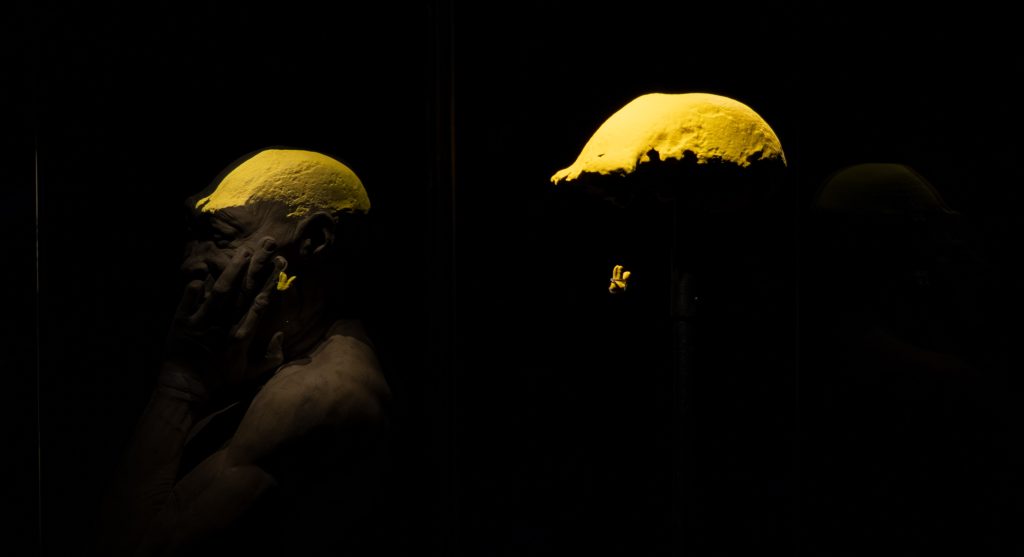
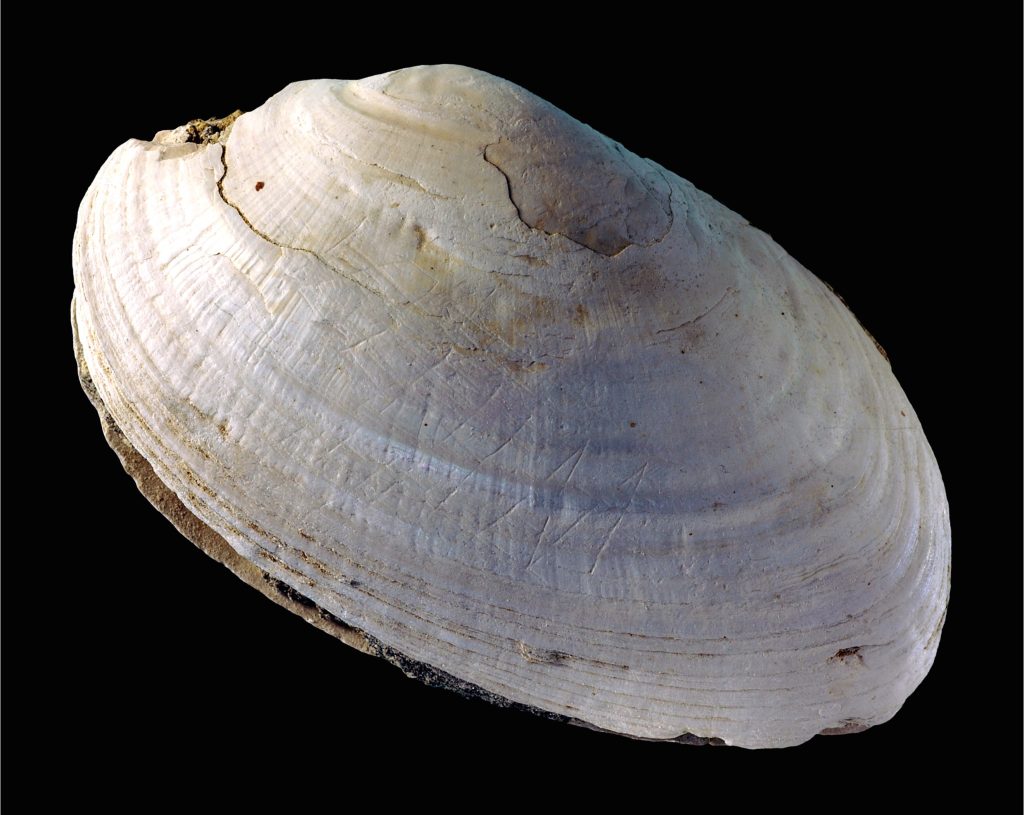
The Dubois collection was until recently part of the Dutch state collection and managed by Naturalis Biodiversity Center in Leiden. It consists of approximately 28,000 fossil specimens gathered by Dutch scientist Eugène Dubois (1858-1940) in the former Dutch East Indies (present day Indonesia). Most of the fossils were excavated on the instruction of Dubois in Java and Sumatra between 1888 and 1900. They play an important role in the knowledge of and scientific debate on the evolution of humans and early hominins. Dubois wanted to prove Darwin’s theory of evolution by seeking the ‘missing link’ between apes and humans (Homo sapiens). The key pieces in the Dubois collection are fossils of Pithecanthropus erectus (popularly known as Java man, and later reclassified scientifically as Homo erectus), namely a femur, a skullcap and a molar.
Over time, the fossils – and especially the Java Man – acquired cultural and political significance, both for Indonesia and the Netherlands, and have been at the centre of restitution debates for several decades. Unlike the items addressed in previous blogs, the collection addressed here consists of a natural history collection, rather than cultural objects or belongings. However, the research carried out shows that this division is not always accurate nor constructive. As we will see in this blog, the nature of the collection, the layered meanings it has acquired throughout the years and the decades-long discussions about its rightful ownership made the provenance research particularly complex and multidisciplinary.
The restitution request
Ever since the fossils were excavated, there has been disagreement about the Dubois collection, both regarding its scientific value and its ownership. In 2022, the Republic of Indonesia submitted an official application for the collection’s restitution after which the Dutch State Secretary for Culture requested the Colonial Collections Committee to provide advice on this request. A central question was whether a natural history collection was eligible for return under the Dutch restitution policy that focusses primally on cultural objects and, if so, on which grounds. Here, the Colonial Collections Committee followed the Explanatory Memorandum (2014) of the Dutch Heritage Law (Erfgoedwet) that makes explicit that “geological and biological specimens are also included in the definition [of cultural objects]” (‘Ook geologische en biologische specimina tot het begrip [cultuurgoed] behoren’) (see Kamerstuk II 2014/15, 34109, nr. 3, page 60).
To be able to advise to the State Secretary, and following the restitution procedure, the Colonial Collections Committee requested the institution then managing the collection – Naturalis – to carry out provenance research, which resulted in a report in 2023. However, the Committee required further historical information about the context in which the excavations took place, about the legal and cultural aspects surrounding questions of ownership (of the collection itself as well as the ground from which it was excavated), and about the removal of the materials to the Netherlands. A multidisciplinary team of researchers – with cultural-historical and legal expertise – was approached to carry out this additional research.
Due to time constraints, the scale of the research and the required expertise, the extra provenance research was carried out by four researchers of the Expert Centre for Restitution of the NIOD Institute for War, Holocaust and Genocide Studies (Maarten van der Bent, Rosalie Hans, Wiebe Reints and Klaas Stutje), who focused mainly on historical research in the Netherlands. Indonesian researcher Yuanita Wahyu Pratiwi conducted archival research in Indonesian archives, which was integrated into the report prepared by the NIOD. Legal experts Tristam Moeliono from Indonesia and Jelle Jansen from the Netherlands focused on the questions of a legal nature.
Het provenance research
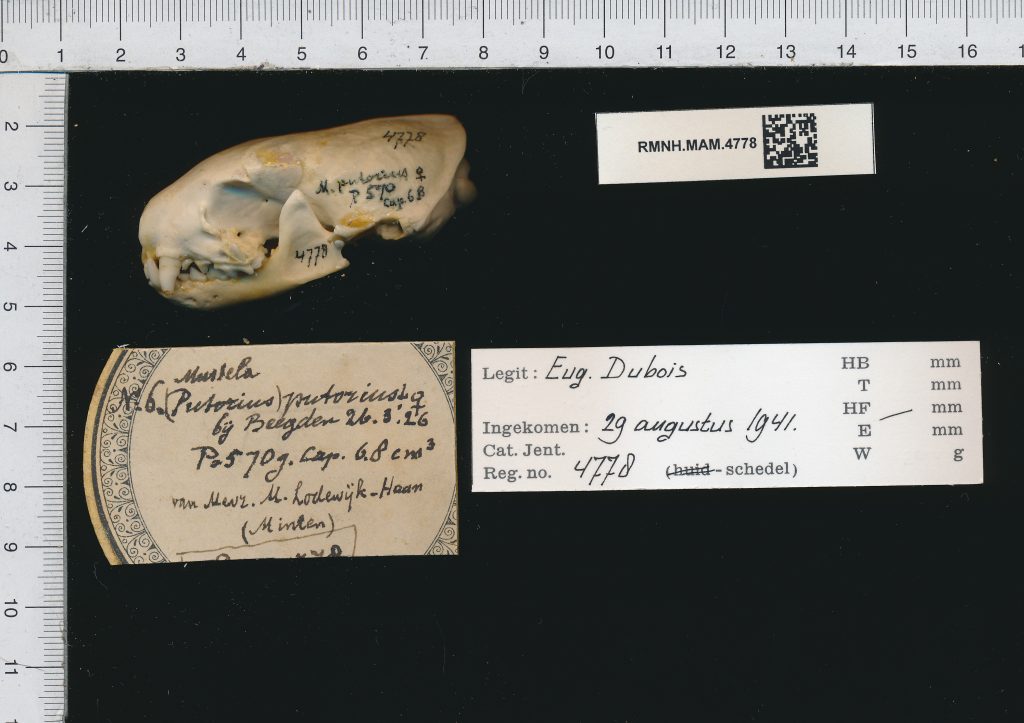
Provenance research usually focuses on the moment of loss of ownership of an item or collection and when it came into Dutch hands during colonial times. The research into the Dubois collection, on the other hand, covers a history of more than 150 years. It examined the period when the fossils were excavated (and under which conditions), the scientific context and cultural values attached to fossils in the Dutch East Indies at the time, official agreements regarding the collection’s ownership and storage in the first half of the twentieth century, and the political and cultural interest in the collection by the independent Indonesian state since the 1950s. It involved researching an extensive collection of archival materials, including Dutch governmental correspondence and other documents held at the National Archives, historical correspondence held at Leiden University, as well as historical correspondence held at the National Archives of Indonesia.
The research conducted by the team at the NIOD revealed, among other things, that the fossil collection excavated in Indonesia under Dubois’s supervision has always held not only scientific value but also political and cultural significance – first from a local Javanese perspective, later from an Indisch or Eurasian perspective and, following independence, from an Indonesian perspective. Furthermore, it shows that the collection and its history need to be viewed as entangled with a colonial system characterized by unequal power relations. The colonial state and army facilitated Dubois to conduct excavations at several locations, for instance by providing numerous convict laborers who were forced to work in the excavations. The research also revealed that the sites where fossils were found were of spiritual and economic significance to the local population, and at times local populations and traders did not want to reveal their location. The circumstances under which the fossils were obtained make it plausible that they were removed against the will of the local population.
The research focused on the legal aspects was determining to the advice of the Colonial Collections Committee. It showed that based on agreements made between Dutch colonial and state officials, the Dubois collection never became the property of the Dutch state. Of particular importance was the stipulation in the Governor General’s decree of 1889 that allowed Dubois to work in Java and Sumatra that stated that Dubois was obligated to place the excavated fossils at the disposal of the Dutch East Indies government. Moreover, when the collection was transferred to the Netherlands in the 1890s to be described and studied by Dubois, this was on the condition that it remained property of the colonial government. In 1933, Minister of Colonies Colijn decided that the collection would be transferred to the then National Museum of Geology and Mineralogyin Leiden, but only after Dubois finished his work. In 1940, Dubois died without having finished processing of the collection, and the suspensive condition was not met. Based on this information, the Committee concluded that the Republic of Indonesia, as the legal successor of the Dutch East Indies government, is the legitimate owner of the collection. This was further underscored by the finding that the excavations were conducted on land owned by the Dutch East Indies government.
In a process that took three years and based on the extensive research carried out over five months, the Colonial Collections Committee advised in favour of the unconditional return of the Dubois collection to Indonesia. On 26 September 2025, the Dutch Minister for Education, Culture and Science announced that the collection of 28,000 fossils would be returned to Indonesia. The fossils known as the Java Man were returned to Indonesia on 17 December 2025, and the rest of the collection will follow in the coming months.
Reflection
The importance of the Dubois collection cannot be separated from the colonial past of the Netherlands and Indonesia. By placing the cultural history of the collection at the centre of the provenance research (alongside its scientific value), a narrative emerged in which all facets of the (post)colonial past become visible: from the oppression of the local Indonesian population, to the development of contemporary scientific disciplines in the Netherlands, the Dutch East Indies, and Indonesia, as well the ambiguous postcolonial relations between the Netherlands and Indonesia in the second half of the twentieth century.
The case addressed in this blog shows that – although often seen as purely scientific and therefore “neutral” – natural history collections cannot be viewed as separate from cultural and political developments nor do they hold solely scientific value. Furthermore, it raises important questions regarding the traditional division made between culture-historical (or ethnographic) and scientific (or natural history) collections. For this reason, the current restitution debates on items collected or looted in colonial times should expand to include not only cultural items but also other types of collections.
Final words
To better understand the historic and current meanings of objects, and how to ethically care for them, information about their origin and acquisition histories are essential. Provenance research is an ongoing process for museums. The Colonial Collections Consortium supports institutions that manage collections with this work by sharing knowledge and information, and by offering stakeholders a network. Would you like to know more or share information with us? Please contact us!
References and further reading
The information presented in this blog derives from the provenance research reports that are part of the recommendation of the independent Colonial Collections Committee, on an article written by provenance researcher Wiebe Reints and published on the NIOD website, as well as a telephone conversation with provenance researcher Klaas Stutje. More information about the return of the Dubois collection can be found on the website of the Dutch government. For more information about the Dutch policy for dealing with collections from a colonial context, please see the website of the Colonial Collections Consortium.